Is Lovable Secure? What to Fix Before You Launch
Lovable the platform is secure. The apps it generates are only as secure as your database configuration. Lovable handles hosting, secrets, and its own infrastructure, but the security of your app's data rests on settings you can see — and often forget — like Supabase row-level security.
Contents
- The short answer
- What happened in 2025: CVE-2025-48757
- How a Lovable app is structured
- The security risks you own
- 1. Row-level security that does nothing
- 2. Confusing the anon key and the service role key
- 3. Secrets left in the frontend
- 4. Server functions that trust the client
- Pre-launch security checklist
- The fix prompt for your agent
- What Lovable secures for you
- Frequently asked questions
- Does Lovable have good security?
- What happened with Lovable?
- Is the Supabase anon key a security risk?
- Can I use Lovable for an app with real user data?
- What's the fastest way to check my Lovable app?
- Sources
This guide explains the real risks, what went wrong in 2025, and the checks to run before you publish.
The short answer
Two different questions hide inside "is Lovable secure?"
The first is about the platform itself — your account, your prompts, your billing. On that front, Lovable has the controls you'd expect: secrets encrypted at rest, role-based access, SSO (SAML/OIDC) and SCIM on enterprise plans, a web application firewall, and data residency in the EU, US, or Asia Pacific. You can opt out of model training on every plan.
The second question is about the app Lovable generates for you. That security is yours, and it mostly comes down to Supabase. Lovable scaffolds a working app fast, and it enables basic row-level security automatically — but the defaults are a starting point, not a finished audit. When people say a Lovable app leaked data, they are almost always describing a Supabase configuration mistake, not a break-in at Lovable.
What happened in 2025: CVE-2025-48757
In spring 2025, security researcher Matt Palmer found that many Lovable-generated apps were exposing their database to anyone on the internet. The issue became CVE-2025-48757.
The official GitHub Security Advisory describes it in one sentence: "An insufficient database Row-Level Security policy in Lovable through 2025-04-15 allows remote unauthenticated attackers to read or write to arbitrary database tables of generated sites." It is rated Critical, with a CVSS score of 9.3.
Does this affect you?
| Question | Answer |
|---|---|
| Affected | Lovable-generated apps published before April 15, 2025 |
| Severity | Critical — CVSS 9.3 |
| Root cause | Missing or ineffective row-level security (RLS) on Supabase tables |
| What to do now | Enable and test RLS on every table, rotate any exposed keys, run a scan |
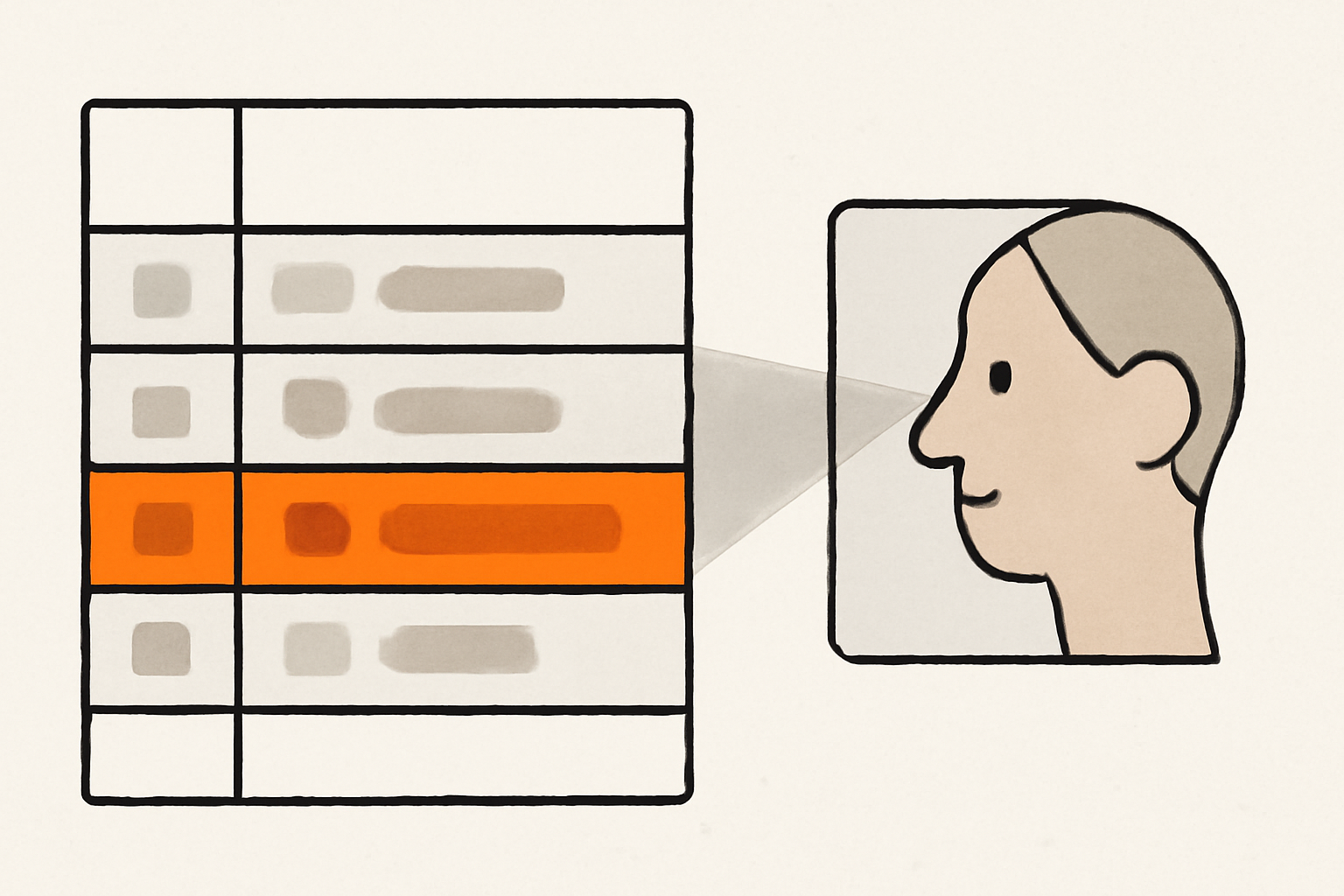
The mechanism is simple, and there is nothing exotic about it. A Lovable app ships with a public Supabase anon key in the browser — that is normal, and on its own it is not a secret. What makes data safe is row-level security, or RLS: a set of policies that decide, for every query, which rows this specific user is allowed to read or write.
When RLS is off, or a policy is written too broadly, the anon key is enough to query the tables directly. No login, no stolen credential. A scanner found the same pattern across hundreds of endpoints in more than 170 generated apps, exposing usernames, emails, phone numbers, payment status, and in some cases API keys stored in the database.
Lovable responded by shipping a security scan, adding a security view to projects, and warning when you paste an API key into chat. The lesson from the incident is not "don't use Lovable." It is: the platform cannot know what your data is allowed to expose. Only you can.
How a Lovable app is structured
To see where the risk lives, follow the three layers Lovable generates.
The frontend runs in the browser. Anyone can open the browser's developer tools and read every line of code you ship to the client. That means two rules. First, no secret ever belongs in frontend code. Second, frontend validation is a convenience, not a security control — it can be bypassed by calling your backend directly.
The backend runs server-side. Lovable uses Edge Functions, TanStack Start server functions, or API routes depending on your project. This is where authentication checks, validation, and anything touching a private key should live. A server function is still callable by a client, so "runs on the server" does not mean "private" — every one of them must check who is calling.
The database is PostgreSQL with RLS. This is the layer that actually stops one user from reading another user's rows. Lovable sets up basic policies automatically, but they are easy to weaken as you add features, and the 2025 incident showed how a loose policy can silently undo everything else.
The security risks you own
Here are the four places a Lovable app usually goes wrong, in the order they show up in real audits.
1. Row-level security that does nothing
This is the big one. RLS only protects you if it is enabled on a table and the policy actually matches your access pattern. A policy that says "everyone can read this table" is worse than no policy, because it looks like protection.
Before you launch, open your Supabase project and check every table that holds user data. The most common patterns — and the policies you should write — are: users can read only their own rows, team members share team data, and public content is readable by everyone but writable only by its owner.
We wrote a longer walkthrough of exactly how to set this up in our guide to Supabase RLS for AI-coded apps.
2. Confusing the anon key and the service role key
Lovable apps use Supabase, and Supabase gives you two keys. The anon key is safe to ship in the browser — it only respects whatever RLS allows. The service role key bypasses RLS entirely and must never appear in frontend code.
The most common mistake in vibe-coded apps is pasting the service role key into a client-side call because it "fixes" a permissions error. It does fix the error — by turning off the security. Read where the service role key must never appear and which Supabase key you can safely expose.
3. Secrets left in the frontend
Lovable warns you when you paste a key into chat, but it can't stop every leak. A Stripe secret key, an OpenAI key, or a Supabase service role key that ends up in a .jsx file is visible to anyone who visits your site.
The fix is to store values in Lovable Secrets and read them only from server-side code, keeping their values out of responses and logs.
4. Server functions that trust the client
An Edge Function that receives a user_id from the request and returns that user's data is an open door: the caller can swap in any user_id. Every server function must verify the caller's identity from the session, not from a value the client sends.
Pre-launch security checklist
Run these before you publish, in order.
- Enable RLS on every table. In Supabase, confirm each table has RLS on. No table that stores user data should be unprotected.
- Write one policy per table that matches reality. Users read their own rows; owners write their own rows; teams share team data.
- Grep the frontend for secrets. Search your code for
sk_live,service_role,NEXT_PUBLIC, and anything that looks like a key. Move all of it server-side. - Confirm only the anon key ships to the browser. The service role key should appear nowhere in client code or in any bundle.
- Add an auth check to every server function. Verify the caller from the session before you trust any ID or parameter they sent.
- Move validation and business logic off the client. Payment amounts, pricing, and permission decisions belong on the server.
- Run Lovable's security scan. It runs automatically on publish; run a deep scan once before going live and review the findings.
- Check the endpoints yourself. Sign out and try to fetch data you shouldn't be able to reach. If you can read a table without logging in, so can anyone.
This maps directly onto our broader Supabase security checklist, which covers each step in more depth.
The fix prompt for your agent
The fastest way through this is to let your coding agent do the pass for you. Paste this into Lovable's chat, or into Cursor or Claude Code if you've synced your project:
Audit this Lovable app for security before launch. Do the following, then report what you changed and anything you could not fix:

1. In Supabase, list every table and confirm Row Level Security (RLS) is enabled. For each table, write a policy that matches the access pattern: private user data readable only by its owner, team data readable only by team members, public content writable only by its owner.
2. Search the frontend (src/, components/) for secrets: Stripe keys, Supabase service_role keys, OpenAI keys, or anything starting with sk_ or service_role. Move every one to Lovable Secrets or server-only code, and reference it only from Edge Functions or server functions.
3. Confirm the browser uses only the Supabase anon key and never the service_role key.
4. In every Edge Function and server function, add an auth check at the top: verify the user is signed in and that they may perform this action. Never trust a user_id passed from the client.
5. Move validation and payment or business logic to server-side code.

Then check that: RLS is enabled on every table, no secret appears in any file served to the browser, no service_role key appears outside server code, and every server function starts with an auth check.
What Lovable secures for you
It's worth being precise about the split, so you don't waste time checking the wrong things.
Lovable's platform side covers: secrets encrypted at rest and scoped to environments, role-based access with separate edit/approve/publish permissions, SSO and SCIM on enterprise plans, a web application firewall, rate limiting, and regional data residency. A basic security scan runs automatically on every publish (10–15 seconds), a deeper scan runs on demand, and dependency checks run in the background as you build. Business and Enterprise workspaces can schedule recurring deep scans and block publishing on critical findings.
None of that replaces your own review, because none of it can know your app's business rules. The platform can tell you a policy exists. It cannot tell you that the policy matches who should actually see each row.
Frequently asked questions
Does Lovable have good security?
As a platform, yes — it has the enterprise controls, encryption, and scanning you'd expect. As a code generator, its output is only as secure as your Supabase configuration. The platform's job and your job are different, and the second one cannot be delegated.
What happened with Lovable?
In 2025, a researcher found that many Lovable-generated apps had missing or ineffective Supabase row-level security, exposing data in over 170 apps. The issue was tracked as CVE-2025-48757, rated Critical (CVSS 9.3), and Lovable has since added security scanning and project security views.
Is the Supabase anon key a security risk?
No, not by itself. The anon key is designed to ship in the browser, but it only respects whatever RLS allows. If RLS is off, the anon key becomes the key that opens everything — which is why RLS, not the key, is the real control.
Can I use Lovable for an app with real user data?
Yes, but only after you audit the generated app the way you would audit any other code. Treat Lovable as a fast way to get a scaffold, not as a finished, audited product. The checklist above is the minimum before you let real users in.
What's the fastest way to check my Lovable app?
Run Lovable's deep scan, then verify the result independently: sign out and try to read your own tables. A scanner checks what it knows to look for; a quick manual probe catches what it doesn't.
Sources
- GitHub Security Advisory — GHSA-773x-pxjg-gxgx (CVE-2025-48757)
- NVD — CVE-2025-48757
- Matt Palmer — CVE-2025-48757 disclosure
- Lovable — Security best practices for Lovable apps
- Lovable — Security at Lovable
Before you publish, scan your site the way a stranger would: see exactly what leaks, with the request and what it returns, and get the fix to paste into your agent. If you're building with an AI agent, Rustine's MCP server can scan and fix your Lovable or Supabase app by itself.